Wednesday, June 11, 2008

Chastity Makes the News

The New York Times is clearly one of those well-intentioned newsrooms where senior editors encourage their hordes of minion writers to get "the scoop" on minority communities.

I really wish they wouldn't. The result is pieces like "In Europe, Debate over Islam and Chastity."

It's true that nothing whets the American news appetite like a) Muslims and b) virgins, two demographic groups the average American finds incredibly weird. The Times batted a hit with the mainstream, since this piece of fluff is now the most email-ed article on NYTimes.com.

And with care and the proper attention, this story might have been great. Instead, it's a mess. First off, the author cites no stats on grounds that there are none. In journalism classes we're taught that it's really a sellout for a writer to resort to the vague "a small but growing number" when trying to justify a trend. This writer not only resorts to it, she offers a lame, one-line excuse as to why she did so. She says that hymen reconstruction surgery is so deeply personal there are no stats available. I find this hard to believe. We're talking about a cosmetic procedure, performed by licensed doctors, in hospitals. I'm sure she could have dug up some numbers.

Second, the article frames the question in light of Muslim "culture." I'm not sure that Elaine Sciolino is an expert on Muslim culture, assuming she even wants to be. Witness the fact that most of the people in her article, the ones having the "debate" over Islam and chastity, are not Muslim.

In fact, she waits until the end of the piece to cite the viewpoint of a lone Muslim dissident, who actually (haha!) turns out to be vice president of a large Muslim Cultural Center. So he's not just some man she grabbed on his way home from the mosque. He says "The man was the biggest donkey of all" but we have to wait until the end of page 2 before we hear someone in the Muslim community call this "small but growing trend" for the absurdity it is?

This story could have been one of several things. It could have been "Among Muslim immigrants to France/England/etc, surgery narrows gap between permissive Western values and religious tradition" or it could have been "In England, hot debate over woman whose marriage was annulled because she was not a virgin." But these better stories would have required more research and better knowledge of the communities into which Sciolino was delving. She could have discussed honestly the difficulties of many European governments in dealing with new immigrants, particularly Muslims. She could have talked about differences between Muslim immigrant communities. She could have researched attitudes towards virginity as expressed by prominent Muslim clerics and scholars in the West. (And to be honest, a real delve might have unearthed the fact that traditional Muslims are really very similar to all those chastity ball dads and "Silver Ring Thing"-ers we've seen before.)

Instead, Sciolino and her faithful "native" sidekick traverse Europe, find a few African women who have had the surgery (and never mind, here, the vast difference between religious and cultural practices of African, Arab, Turkish and American Muslims, never mind the variety to be found in the vast diaspora of the world's third-largest religion) and file this sucker before the Wednesday deadline.

It comes off as what it is: a cliche-ridden, cobbled-together, inadequately-sourced and (worst of all!) misleading piece of tripe.

Friday, June 6, 2008

The real difference between McCain and Obama

Much has been made of the differences between McCain and Obama, differences in rhetorical style, personal history, professional qualifications. But the real difference between them only becomes obvious in their AIPAC speeches.

Both politicians tried last week to forge a personal connection with one of Washington's strongest lobbies. Each brought up what he believed to be the strongest moment in America's relationship with the Jewish world.

McCain
said, "When President Truman recognized the new State of Israel sixty years ago, he acted on the highest ideals and best instincts of our country." He also referred to the Holocaust, saying "And today, when we join in saying "never again," that is not a wish, a request, or a plea to the enemies of Israel." He played on the most critical and obvious fear of Jews in America: that the Holocaust will be repeated, and that the ugliness of the past doesn't go away.

Obama, on the other hand, chose a very different historical moment to analyze: " In the great social movements in our country’s history, Jewish and African Americans have stood shoulder to shoulder. " Of the future, he said, "Their legacy is our inheritance. "

Both men toed the party line, saying that they would never discount military force as an option when dealing with Israel's enemies. Obama also said, "I also believe that the United States has a responsibility to support Israel’s efforts to renew peace talks with the Syrians." And he spoke to one of my (pet) concerns when he said "Israel can also advance the cause of peace by taking appropriate steps - consistent with its security - to ease the freedom of movement for Palestinians, improve economic conditions in the West Bank, and to refrain from building new settlements - as it agreed to with the Bush Administration at Annapolis."

But ultimately, the difference between the two men came down to this. McCain said, "The threats to Israel's security are large and growing, and America's commitment must grow as well." Obama said, "I deeply understood the Zionist idea - that there is always a homeland at the center of our story."

And if McCain did well to capitalize on fear, Obama may have done better to talk about home. The truth is, Jews in America are just that: Jews in America. My many Jewish friends can criticize and commend Israel in equal measure. They are the recipients of a dual legacy: that of the Holocaust, yes, but also that of the people who realized that "never again" meant standing up against bigotry in all its forms, across nations and cultures.

This legacy is something that McCain, the torture survivor, could also have cited. Because McCain knows, just as Obama does, that fear can inspire strength. What is telling is that McCain chose not to talk about that. Instead, he talked about the foundation of Israel, which was, in many ways, not America's strongest moment. After treating the Jews of the world abominably, the US joined Europe in creating a nation where none existed, without consulting the people there or considering the consequences. Instead of offering refuge to Jews fleeing the European death camps, America preferred to send them far, far away.

That, in McCain's opinion, was one of our moments of greatest national strength.

Tuesday, June 3, 2008

I Cry Over Milk That Has Yet to be Spilled

My first mistake was buying the planner.

It was bright pink, and obscenely cheery and compact, and it had space in it for 1.5 years. It seemed perfect. It wasn't until today that I realized I'd made a terrible error.

See, I was flipping through the pages to write in my graduation date - which by the way, is in three weeks. And suddenly I realized: after graduation, there are 12 more months for me to fill in this little planner (assuming I don't lose it, which the odds are against). There will come a time a year from now when I'll be able to flip through to the beginning, and I'll notice the little notes I made "DZ Cubs Game" and "Brings Props and Costumes for Castle" and "Hindi midterm 3" and "Dillo Day Shindig" and I'll have to accept that an era in my life actually ended, somewhere between pages 60 and page 63.

This may sound melodramatic, and it is, but it reminds me of this heroine I read about in sixth grade, who wrote letters to herself. Every year on her birthday she wrote herself a letter, and she opened the letter she'd written the year before. I tried this, but before the first year was up I'd forgotten where it was, and I found it by accident years later, and it was about halfway through (where I wrote "let's be honest, M-- is the only guy in our sixth grade class whom I'd even consider dating" that I was so horrified I burned it)

Anyway, that experiment failed, and thank God, because what an exercise in misery. I hate looking back because to me, nostalgia is more terrifying than heights. I realize, of course, that life is not in fact a vast funnel narrowing inexorably into Death, but I'd still rather not contemplate the infinite.

Because what frightened me earlier is not that one day I'll look back and realize what time has gone by, but that today, here and now, I have no idea what lies ahead. The thought of the entire universe that goes by in a year is so frightening. I've always been unnecessarily frightened by this, and for years after something ends I spend far too much time feeling belatedly bereft, just to avoid feeling presently confused.

This is a bad strategy. So now I'm of two minds: either destroy the damn planner and get a new one when my new life starts, or keep it as a test of my character. After all, there might come a day when the phrase "Hindi midterm 3" makes me want to cringe just as badly as my sixth grade flames do now. Or when I don't really care at all.

Monday, June 2, 2008

He with the loudest voice...

I often hear educated people in the United States excuse their anti-Muslim views by saying "if the majority of the world's Muslims don't support terrorism, why don't they step up to condemn it?" This argument is bigotry masquerading as reason. Plenty of Muslims condemn terrorism - today I picked up a copy of Al bayan, the newsletter for our university's Muslim Cultural Students Association. At the risk of being ridiculed by their peers, the editors write that they chose to distribute Al Bayan campuswide because they wanted "to give our voice a public position and the power to inform."

What about Asra Nomani, who went to the front of the mosque and for her trouble received threats against her life (in addition to a lucrative career as a writer).

What about Mukhtar Mai?

What about the Iraqi Muslims who hide their Jewish neighbors from state reprisal?

Is this not moral courage? In standing up to the doctrines that insist women belong in the back of the mosque, that Muslims should stay silent, that rape victims should kill themselves, and that Muslims should terrorize Jews, these people resist. In doing so they risk their lives. Men called Mukhtar in the middle of the night threatening to repeat the gang-rape that devastated her life. Others told Nomani they would slaughter her "halal-style."

Do these acts of moral courage count for nothing? In resisting the terrorism that controls their daily lives, aren't these people defying terrorism? Aren't they attempting to recreate a peaceful Islam in the modern world?

If all commentators who said "Muslims should speak up" got a midnight call threatening to slit their throats as thanks for expressing their beliefs, how many would still speak up?

By making those comments, we demean the bravery of Muslims all over the world, every day, who risk everything they have and more to make the world better for all of us.

Education: the Only Human Necessity

I had no words for this. In fact, I'd planned on leaving it as a testament to the consummate and obvious folly of the Bush administration, but in the interest of honesty I should add that the Fulbrights were reinstated.

But here's what I can't let go of: the Defense Ministry kook who justified Israel's first decision not to let the students leave Gaza said "Education is not a humanitarian necessity."

Whoa. It kind of makes you wonder: what else doesn't qualify as a humanitarian necessity? Israel's strategy of "isolating" Gaza reminds me eerily of the US internment of Japanese Americans during World War II. It was a shame for our nation, one that we seem to skip over in history class perhaps because there's just no way to excuse it. If education doesn't qualify as a humanitarian necessity, what does?

The largely innocent people of Gaza are suffering for the crimes of their extremists. This may satisfy some Israelis' desire for revenge, but how does it help anyone else? The Palestinians cannot leave to attend university, to visit dying relatives in the West Bank, or to assume any of the apparatus of a free existence.

Before people say that it's extreme to compare Gaza to an internment camp, remember that part of Israel's strategy is to strictly control the flow of supplies into Gaza. Who knows what that supply is, if the people in charge of enforcing the blockade think education is not a humanitarian necessity?

A comparable strategy would be if the United States fenced off Texas and allowed no one in or out in order to solve the problem of illegal immigrants moving from Texas to other states. (Wait...)

Israel's line seems to be "until they behave, they get nothing." But who's 'they?' If there wasn't a 'they' before there will certainly be one now.

Do the innocent people of Gaza deserve to suffer for the crime of being Palestinian? Because it seems like that's what's happening.

Wednesday, May 28, 2008

Who's Your Uncle?

Another spring, another political scandal. I don't know enough about Ehud Olmert to pass judgment on his leadership in Israel, although I admire anyone who makes a reasonable go of the job.

I do find the NY Times story on Olmert's possible regisnation to be very interesting. Halfway down the page, author Isabel Kershner refers to one of the participants in a legal deposition as "avuncular" and "unassuming." In so saying, Kershner runs, colors flying, across the hard line between fact and opinion. In the breakdown of literary boundaries that has accompanied the information age, journalists might feel the need to 'paint a picture' for readers at least as compelling as that offered by novelists or memoirists. Nonetheless, it was not the best choice of words.

Speaking of journalism, Fareed Zakaria once more asserted the self that made me so fond of him in this fantastic piece about terrorism, where he debunked the meme that has taken hold in the popular press that terrorism shows no sign of fading. (In fact, I said this just yesterday.)

Zakaria titled his piece "The Only Thing We Have to Fear" a phrase so entrenched in our cultural consciousness that it's now a cliche. The sentence reminded me of another adage, dusted off and presented to me in my first year of journalism school. We must "speak truth to power" suggested the earnest journalistic manifesto I signed my freshman year. At the time I thought that phrase belonged to journalists, although in fact it started with the Quakers.

Zakaria, more than most journalists I've read, makes a living off "speaking truth to power." He picks a wide-ranging power as his audience. Sometimes it's corporate America, sometimes the Bush administration, more often it's the universe of editors and advertisers who direct American publishing.

"Speak Truth to Power" sums up the presidential race. The thing is this: I'm reading Obama's "Dreams from my Father" right now, and I've started to realize. This man might not be presidential material. Not because he'd be a bad commander-in-chief, but because Obama has his roots on the South Side. He used to pick do-nothing teens off the streets past Ninety-Fifth (yikes, say I, being from the Windy City). He knew where it was at.

Obama is a man in his element when he's "speaking truth to power." He's not so hot at being the power himself. He might do okay, but in terms of best allocation, he'd be better off as a rogue U.N. inspector, a Mohamed ElBaradei character, a thorn in the feathers of doves and hawks alike. To a degree, the same can be said of John McCain. McCain is on the wagon at last, but I wish he were off. Sometimes it seems he's lost himself in the make-believe land of Bushisms, paying no attention to the man behind the curtain.

Hillary, well, now there was a candidate. Forget about speaking truth to power. Hill was at her best with her arm across the windpipe of the opposition. Her forte was a fuerte unmatched in the present field. But due to the way the political winds have huffed and puffed, it seems this outcome (where Hillary becomes President and Obama and McCain take turns heckling her from the floor) is the only one we shall not have. Too bad, really.

Tuesday, May 27, 2008

The Immigration Conundrum

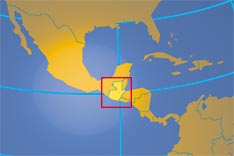
A court in Iowa recently sent 270 illegal Guatemalan immigrants to federal prison. The judge who pronounced the sentences said to the group, "I don't doubt for a moment that you are good, hard-working people...unfortunately, you committed a violation of federal law."

Unfortunately, the decision in Iowa could shape the emerging debate over illegal immigration, and set a precedent that might ultimately undermine rather than help the American economy.

We live in difficult times. Debate over the U.S.-Mexico fence has bogged down in disputes over Native American land claims. Terrorism shows little sign of abating. The job market is projected to weaken across all sectors.

And there are problems on a local level. Despite their contribution to local economies, illegal immigrants don't pay taxes. And the public services they use - education, hospitals - are funded through tax revenues. With the Bush stimulus plan in full swing, and the government running a deficit due (in part) to a big defense budget, there's just no money to be given in the form of federal tax relief to underfunded school districts. Districts that lean on federal funding (typically ones that underperform, a relationship which may or may not imply causality) have to do something. But so do states where education funding comes from local revenues (Iowa falls into this category, with 42.5% of expenditure coming from local sources.)

Gone are the days when INS - now ICE - might turn the other cheek.

But what is the solution? Economic analysis shows immigrants - even illegal ones - are a net benefit to the national economy. (A consensus among numerous studies I looked at) Nonetheless, the taxpayers of California (for example) can hardly afford the emergency room operations given out by law to all comers, regardless of immigration status. (The other option, which is to let illegal immigrants and their children suffer on the street, is even more unpalatable, as well as inconsistent with our national values)

Meanwhile, what happens to industries where much of the labor force comprises illegal immigrants? 20% of illegal immigrants work in construction, but a disproportion number also work in agriculture and fast food preparation. Right now, there is no action pending against Agriprocessors, the company that employed all 270 of the illegal immigrants. Regardless of the justice of this situation, to lock up the immigrants and let the company go free is to get the leaf of the problem without even touching the root.

The fence will not keep people out. After all, Iowa's immigrants came from Guatemala.

To be more utilitarian: what is the optimal allocation of illegal immigrants in our economy such that it will function most efficiently? The politician's answer: 0. The economist's answer: not 0. The ethical American's answer: ?

Some action might have been necessary in Iowa. But the action the court took was wrong on almost every level. And the entire United States will have to make immigration decisions in the aftermath of that precedent.